How it works.
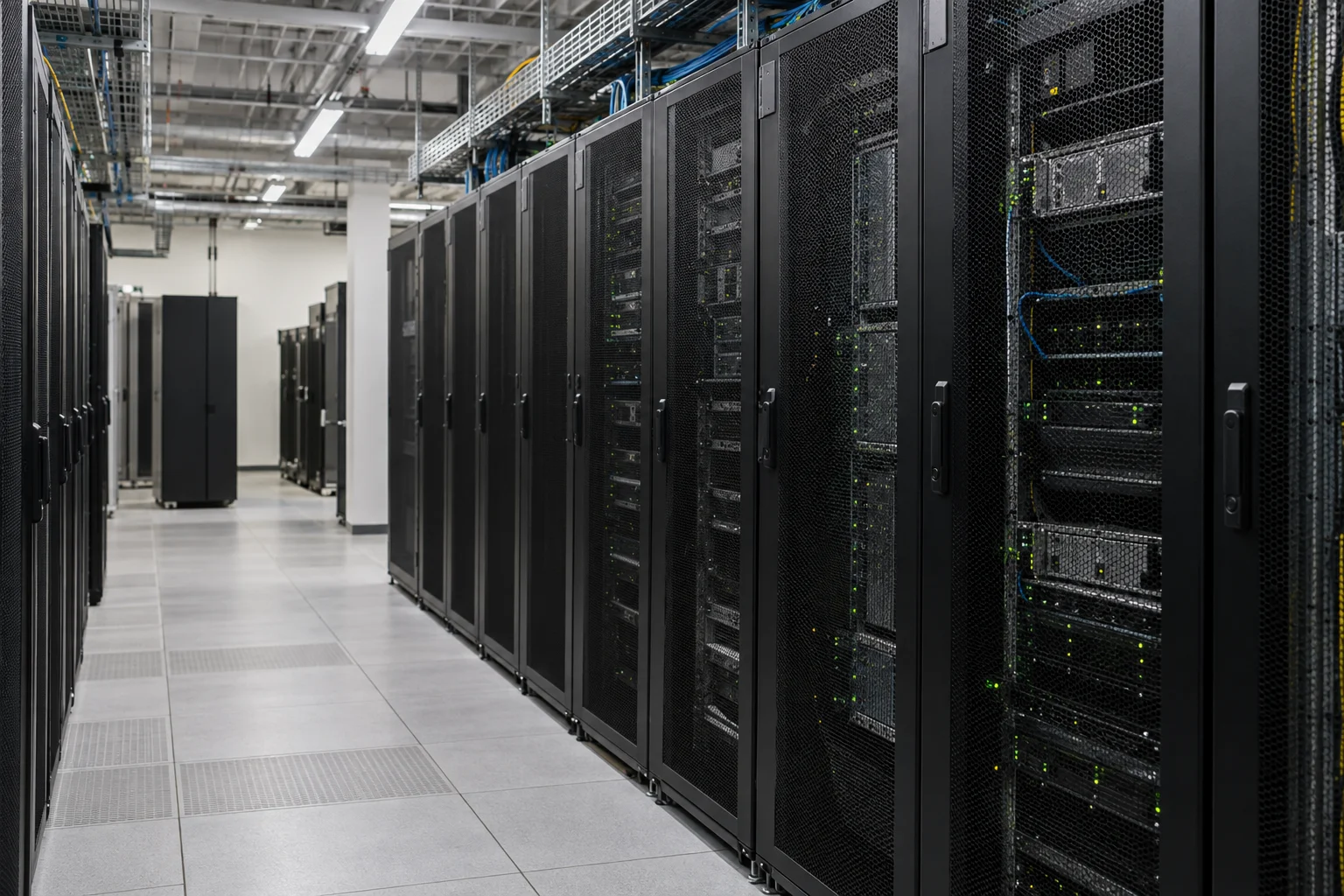
A colocation facility provides an environment for equipment through power distribution, cooling, physical access controls and connections to networks. Customers typically place their own servers and associated hardware in allocated space. The service boundary varies when managed services are added, so responsibility for operating systems, applications, backups and data must be established explicitly. Equinix's published shared-responsibility model illustrates this distinction: using a colocation service does not automatically transfer responsibility for the customer's wider technology stack to the facility operator.
Electricity powers the computing equipment and creates heat that must leave the facility. Cooling may move that heat through air, liquid or a combination of systems before releasing it outside or supporting a suitable reuse application. The Department of Energy treats IT equipment, air management, cooling and electrical systems as interacting design choices. A proposed hardware layout therefore needs a matching environmental design. Available space, electrical capacity and cooling capability should be understood together, alongside the practical route for cables, pipes, maintenance and equipment replacement.
Where it creates a useful connection.
A site can be attractive for different reasons: proximity to users, access to particular networks, equipment control or the ability to accommodate a defined workload. The decision should begin with those requirements and then test the facility against them. A comparison should separate the recurring facility service from power arrangements, network connections, installation, remote assistance and migration work. It should also identify what expansion is genuinely available and what remains dependent on future construction, commissioning or customer-specific design approval.
Continuity requires an operating relationship as well as physical infrastructure. Review how planned maintenance, incidents, access requests and equipment faults are handled, including handovers between the customer and provider. A service-level commitment should be read with its measurement boundary, exclusions and remedies; it does not describe every application outcome. Environmental review should likewise keep different measures distinct. Energy overhead, water use and the source of electricity answer different questions. The relevant comparison uses a stated boundary and operating conditions, with evidence that matches the actual facility and proposed service.
Treat colocation as a defined service boundary within a larger digital system. The best-fit facility is the one whose evidenced operating envelope matches the customer's workload and responsibilities.