
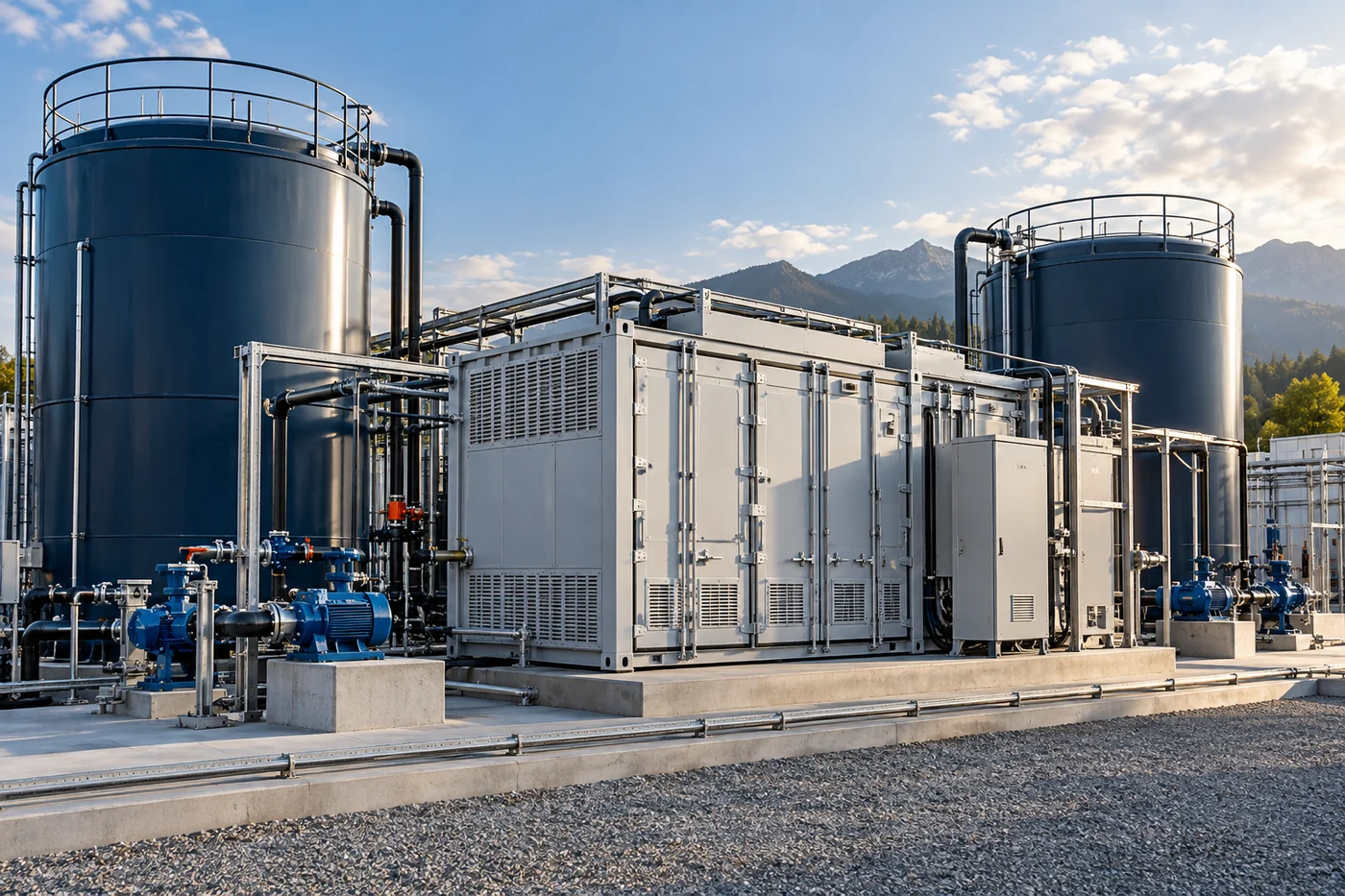
How it works.
A conventional redox flow battery stores active materials in liquid electrolytes held in external tanks. Pumps circulate those liquids through a cell stack, where reversible electrochemical reactions absorb or release electrical energy. A membrane allows selected ions to pass while helping keep the electrolytes apart; electrons travel through the external electrical circuit. Tank inventory largely determines stored energy, while the stack determines power. This separation gives designers flexibility to match discharge duration to an application. The distinction requires care: hybrid flow batteries that deposit a solid active material can couple energy capacity more closely to stack design.
The complete installation also includes piping, valves, sensors, controls and power conversion equipment. These parts turn an electrochemical process into an operable plant. Chemistry influences temperature limits, material compatibility, electrolyte stability and maintenance. Vanadium, iron-based and organic systems should therefore be treated as separate technical propositions. A promising electrolyte test does not establish the reliability of pumps, seals or a manufactured stack. Equally, a long-lived active material does not mean every component has the same service life. Useful performance evidence follows energy through the entire installation, including auxiliary consumption and conversion losses.

Where it creates a useful connection.
The practical starting point is the service the storage asset must provide: shifting renewable output, supporting a microgrid or delivering backup energy. The required discharge profile, charging opportunity and operating frequency determine whether a particular flow-battery configuration is suitable. Land, containment, installation access and maintenance arrangements belong in that discussion early. Flow batteries can suit stationary applications where flexible energy sizing matters, but the technology label alone says little about delivered availability. A comparison should specify the same useful output, operating conditions and system boundary for every candidate.
Commercial diligence should connect laboratory results, full-system tests and operating references without treating them as interchangeable. Ask which equipment was tested, under what duty cycle, and how much intervention the results required. Define responsibility for electrolyte management, replacement stacks, controls and commissioning. A clear service plan should distinguish reversible capacity imbalance from permanent degradation and explain how each is diagnosed. For procurement, evidence quality matters as much as a headline lifetime claim: acceptance criteria should describe the energy delivered at the connection point and the conditions under which that performance is maintained.
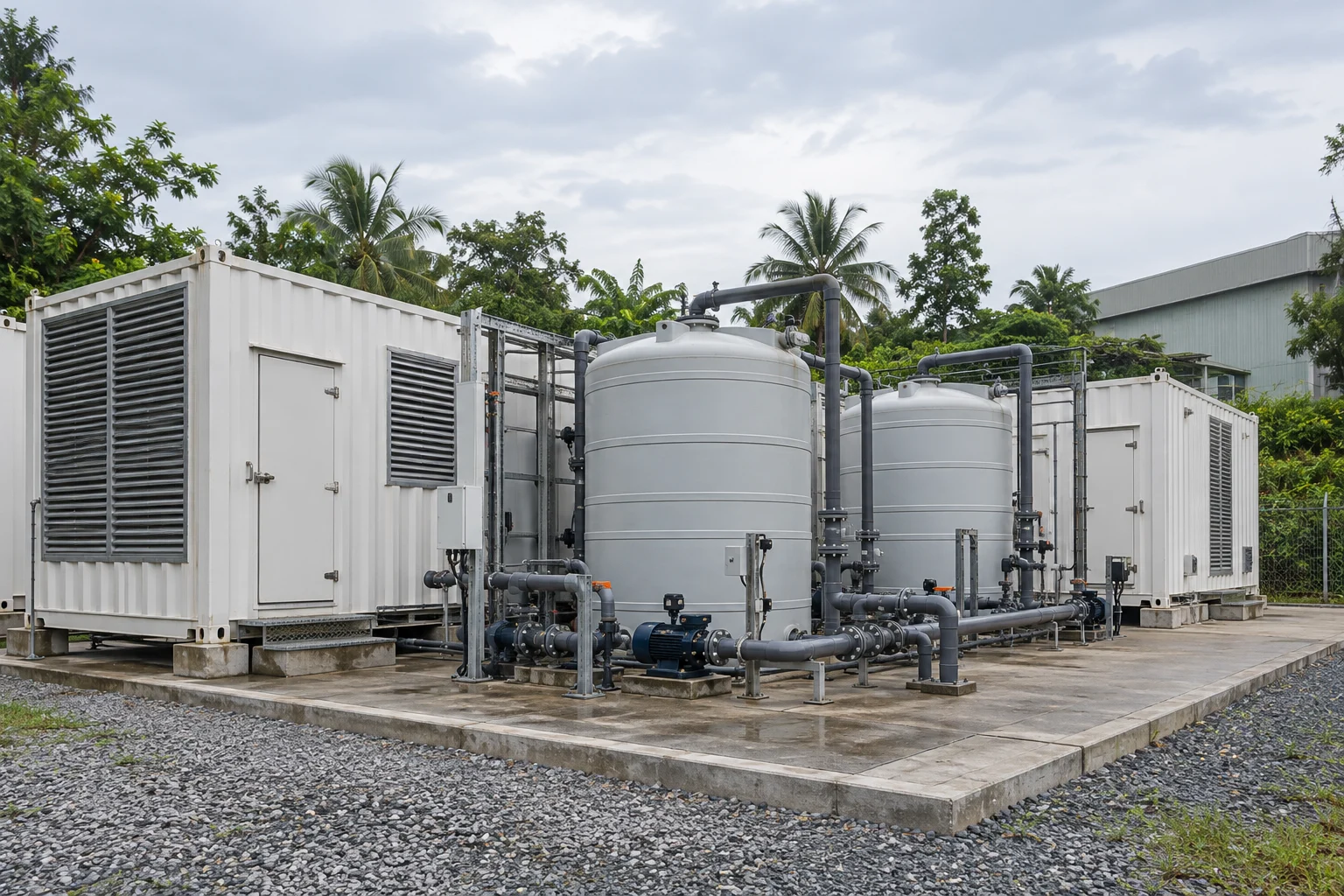
Evaluate a flow battery as a chemical process plant with an electrical interface: application fit depends on the complete system and a credible operating plan.